AWL
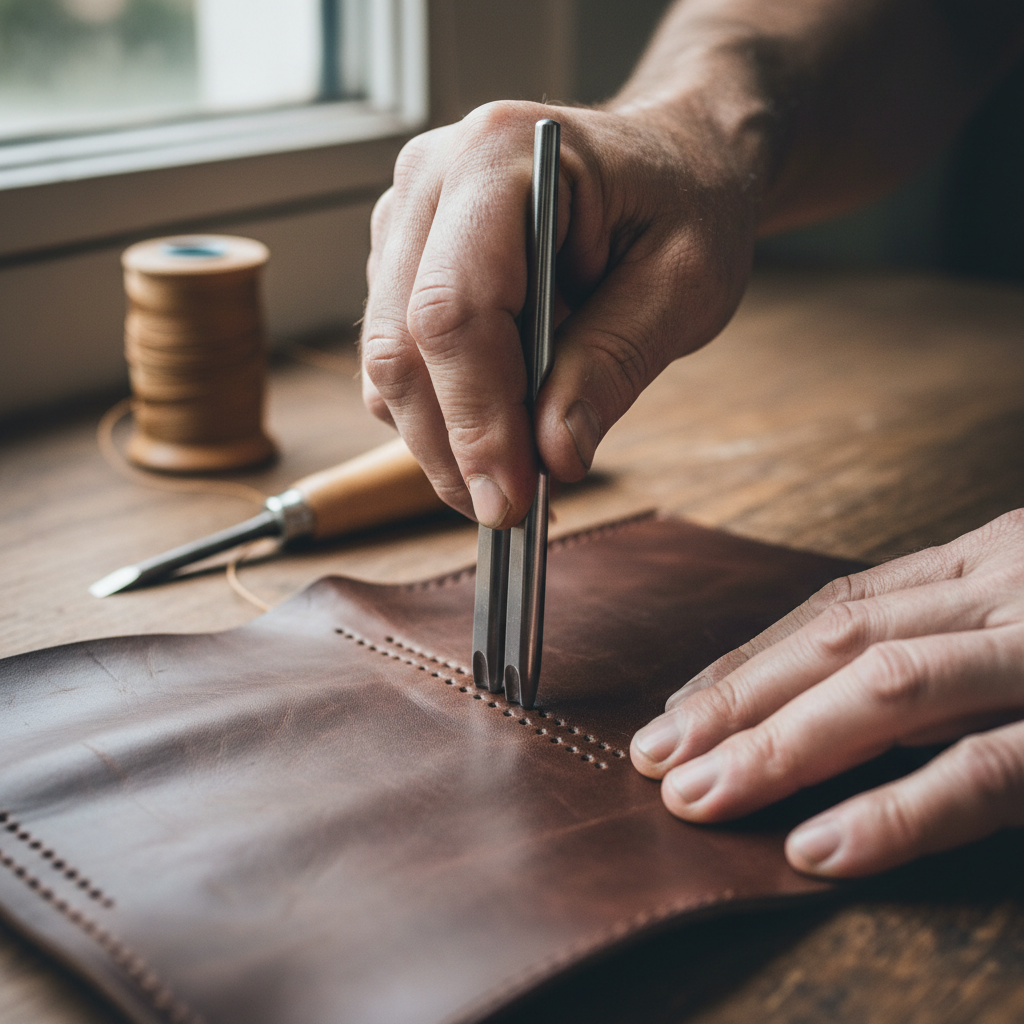
Eleanor Marsh
Lexington, Kentucky
Hermann Oak bridle leather, 12–14 oz, pulled from a 40-year-old side.
Osborne #47 pricking irons, re-filed to 4 stitches per inch.
Ritza Tiger thread, 0.8 mm, waxed by hand with beeswax block.
A granite surface plate for trueing edges — the same one her mentor left her.
The leather tells you when you've skived too thin. You feel it before you see it — a softness where there should be resistance.
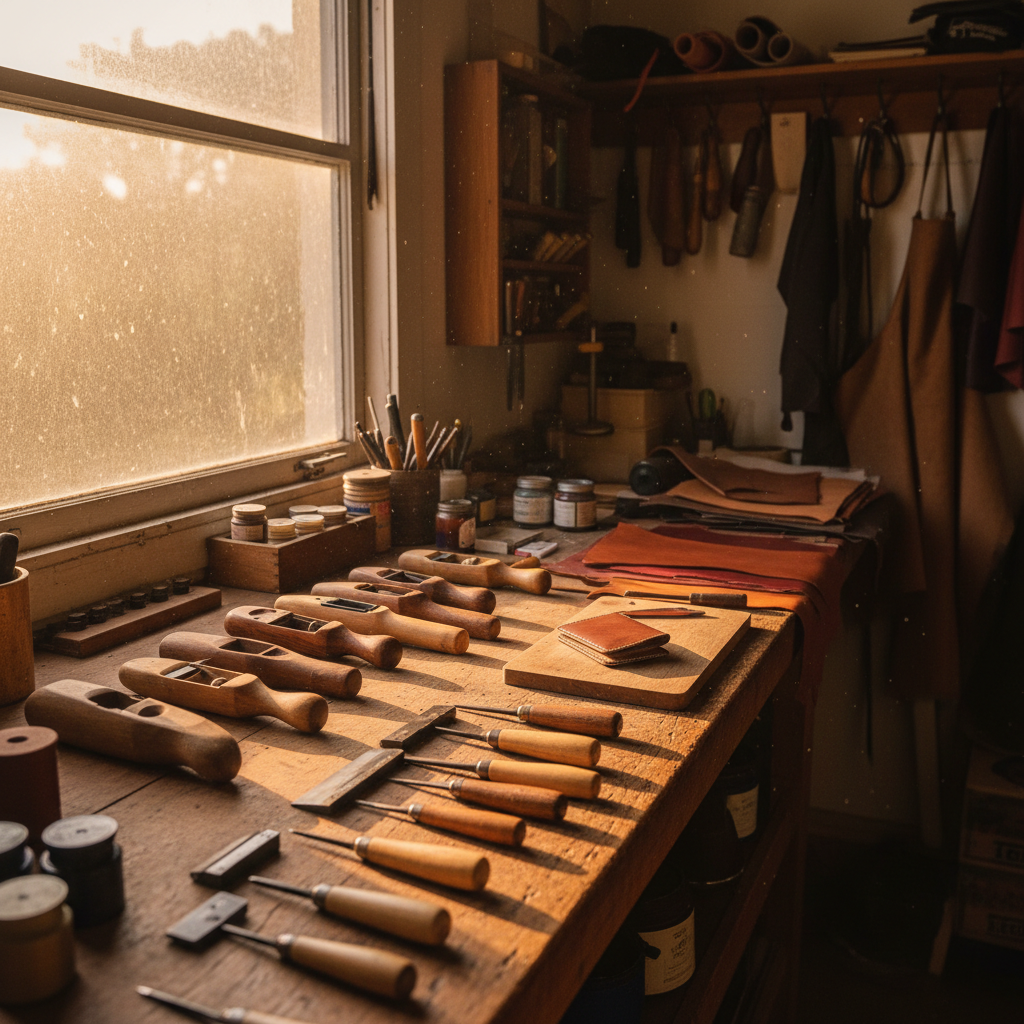
Eleanor Marsh
On Skiving and the Geometry of a Clean Taper
Gabriel Osei
Portland, Oregon
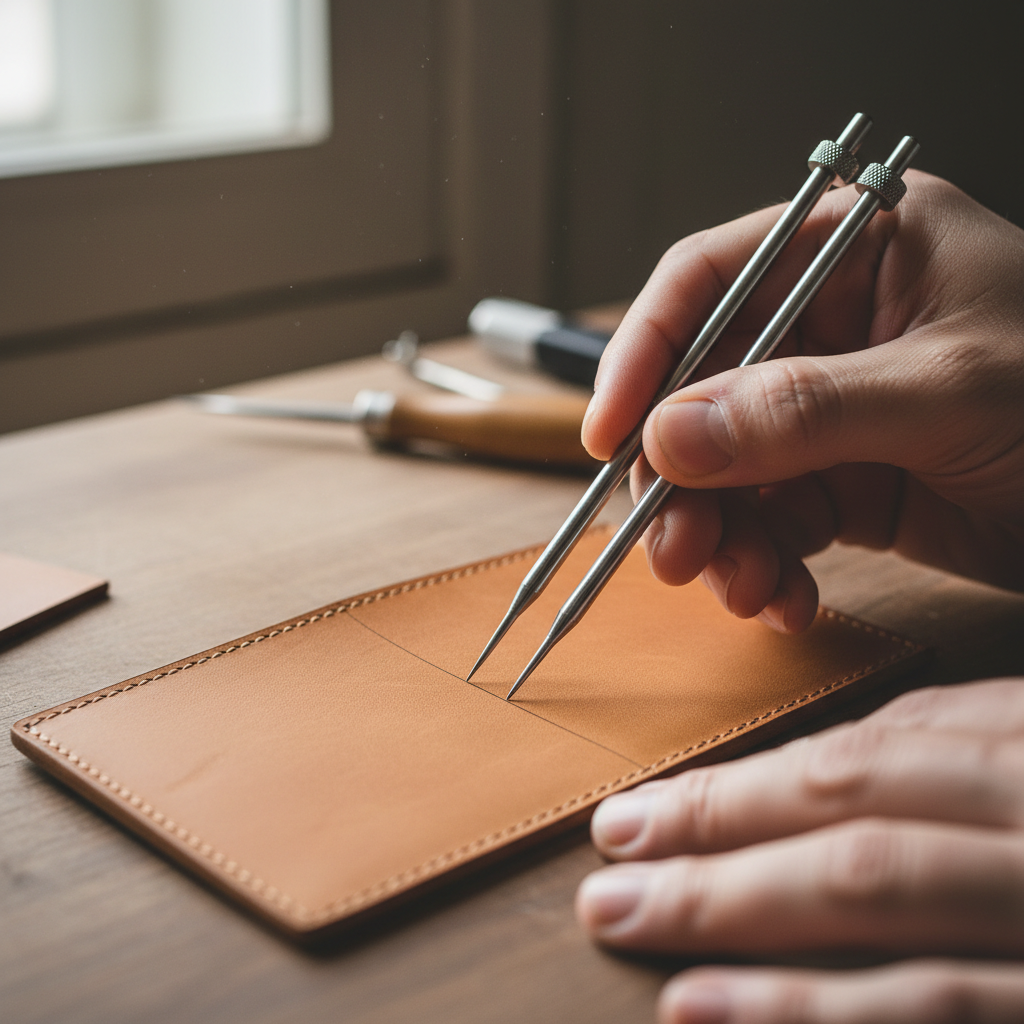
Wickett & Craig natural veg-tan, 2–3 oz, conditioned with neatsfoot oil.
Tandy wing divider, adjusted to 3 mm from the edge — consistent every time.
Tokonole burnisher on a wooden dowel, run against the grain for a glass edge.
A single overhead lamp, no shadows. Mistakes hide in bad light.
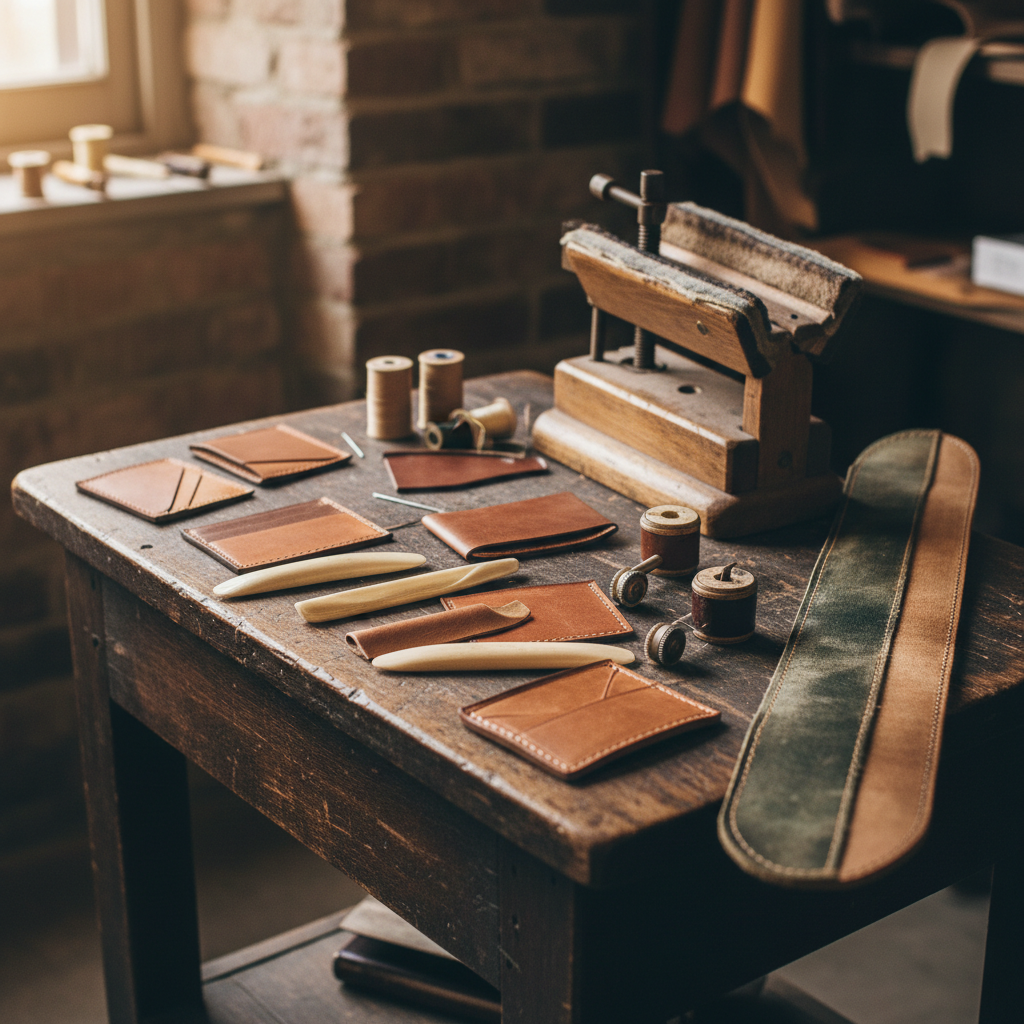
I sell at markets where people can feel the work. That changes everything about how you finish an edge. They will touch it before they look at it.
Gabriel Osei
Selling at Markets: What Customers Actually Handle
Ruth Nakamura
Tucson, Arizona
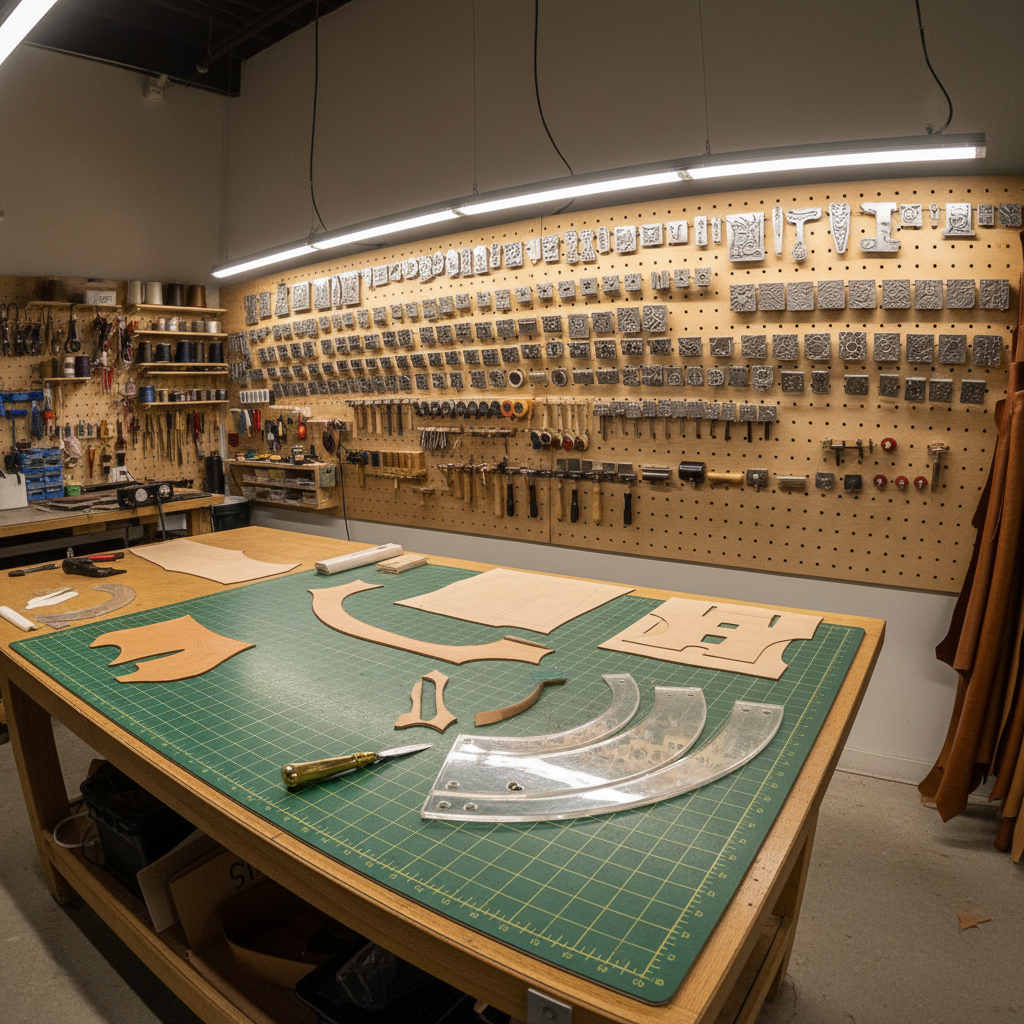
Tandy Craftsman 9–10 oz for holster shells — consistent temper across the side.
Swivel knife reground to a 30-degree bevel for tight radius cuts.
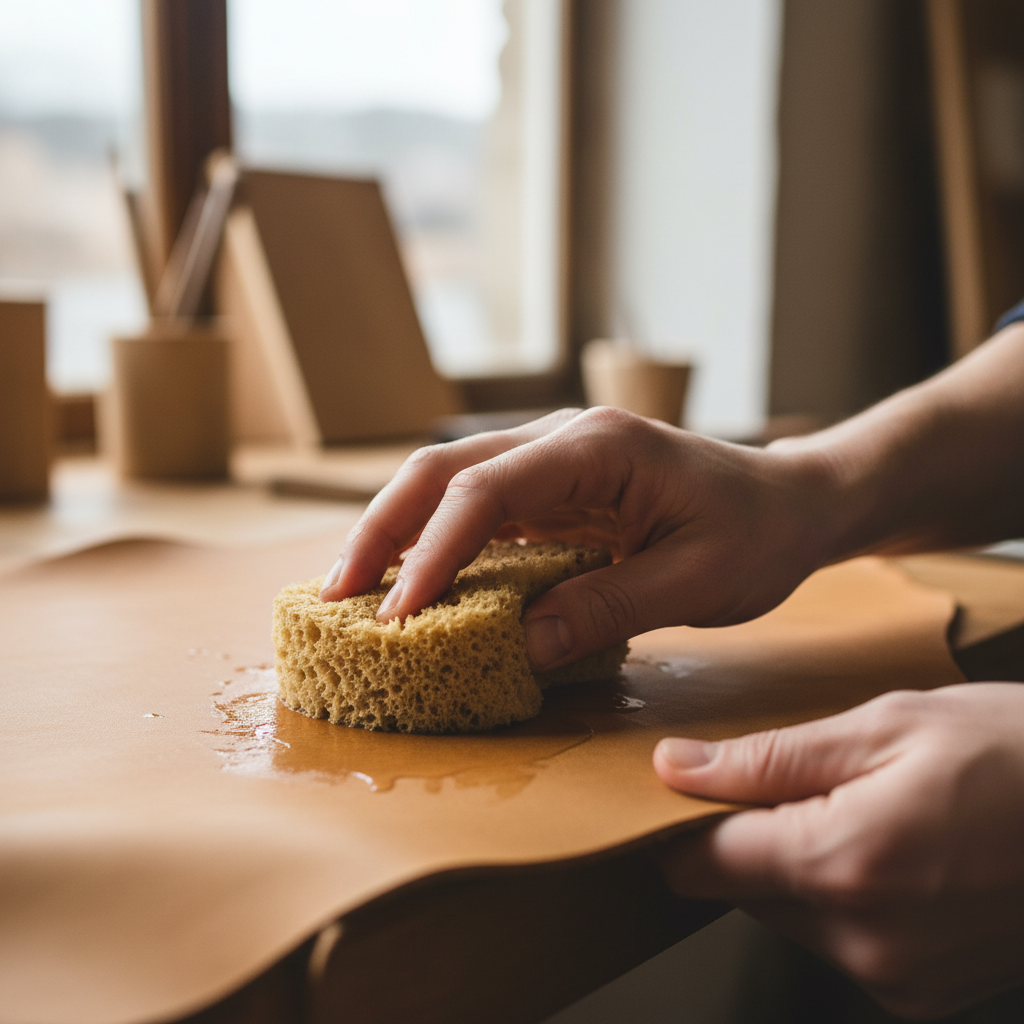
Casing water kept at room temperature; cold water shocks the fiber.
A carved wooden form for every model she makes. Forty-three forms and counting.
Wet-forming is a conversation. You push, the leather pushes back. If you rush it, you get a shape. If you listen, you get a fit.
Ruth Nakamura
Wet-Forming Fundamentals: Reading the Leather's Memory
Save My Seat
at the Bench
One essay per week. No tutorials, no padding — just the kind of knowledge that used to pass only through shop talk.
Issue One ships when we hit 1,000 makers
35% of the way there
No spam. Unsubscribe any time. One letter per week, that's all.